Quick answer: To build a reading habit in primary school children, make reading a short, enjoyable part of the daily routine. Let children choose books they like, read aloud together, talk about stories, and celebrate their effort instead of testing them after every page. Consistency matters more than forcing a child to finish a book.
Reading can help children explore new ideas, discover different worlds and enjoy stories beyond their school textbooks. But a child who associates books only with homework, spelling tests or difficult passages may not choose to read during free time. Parents can help change that by making books accessible, interesting and part of everyday family life.
If you want to know how to develop a reading habit in primary school children, start with a few manageable changes at home. You do not need an expensive bookshelf or a large collection of books. A comfortable place, a suitable story and a little time together can be a useful beginning.
Why is a reading habit important for primary school children?
Primary school is an important period for developing reading fluency, vocabulary and comprehension. Reading different types of material also helps children learn about people, places, nature and ideas outside their immediate experience.
- Vocabulary development: Stories introduce words and expressions that children may not hear in everyday conversation.
- Reading comprehension: Discussing characters, events and ideas encourages children to think about what they have read.
- Curiosity and imagination: Fiction, comics, poetry and non-fiction give children opportunities to explore subjects that interest them.
- Confidence: Reading suitable books regularly gives children opportunities to practise at a comfortable level.
- Family connection: Reading together creates time for conversation, questions and shared enjoyment.
Reading should not become another source of pressure. The aim is to help children enjoy books while gradually strengthening the skills they need for school and everyday life.
1. Start with your child's interests
One of the simplest ways to encourage reading is to offer books about subjects your child already enjoys. A child fascinated by animals may enjoy wildlife stories, while a child who likes space may prefer illustrated books about planets and astronauts.
Consider offering a mix of:
- Picture books and short stories
- Animal, nature and science books
- Comics and age-appropriate joke books
- Poems, rhymes and folk tales
- Sports stories and biographies for children
- Simple non-fiction books about everyday life
Allow your child to choose between two or three suitable books. Giving children a say in what they read can make reading feel like their own activity rather than an instruction from an adult.
It is also fine if a child wants to read the same favourite story repeatedly. Familiar books can help children anticipate events, notice details and join in with words they recognise.
2. Create a small daily reading routine
Children are more likely to remember an activity when it has a regular place in their day. Choose a reading time that fits your family's schedule, such as after an evening snack, before bedtime or after homework and a short break.
Begin with around 10 minutes a day if that feels manageable. You can gradually extend the time when your child is comfortable and interested. Some children will happily read longer, while others may prefer a short story or a few pages.
Example of a simple daily routine
Time | Activity | Purpose |
|---|---|---|
2 minutes | Choose a book together | Build choice and interest |
5 minutes | Read aloud or take turns | Practise listening and reading |
3 minutes | Talk about the story | Connect words with meaning |
This is only a sample routine, not a strict rule. Adjust it to your child's age, reading ability and attention span. If the child is tired, a short, pleasant reading session is better than turning the activity into a daily argument.
Parent tip: Connect reading to an existing habit. For example, keep a storybook near the place where your child gets ready for bed. A predictable cue can make it easier to remember reading each day.
3. Read aloud even after your child learns to read
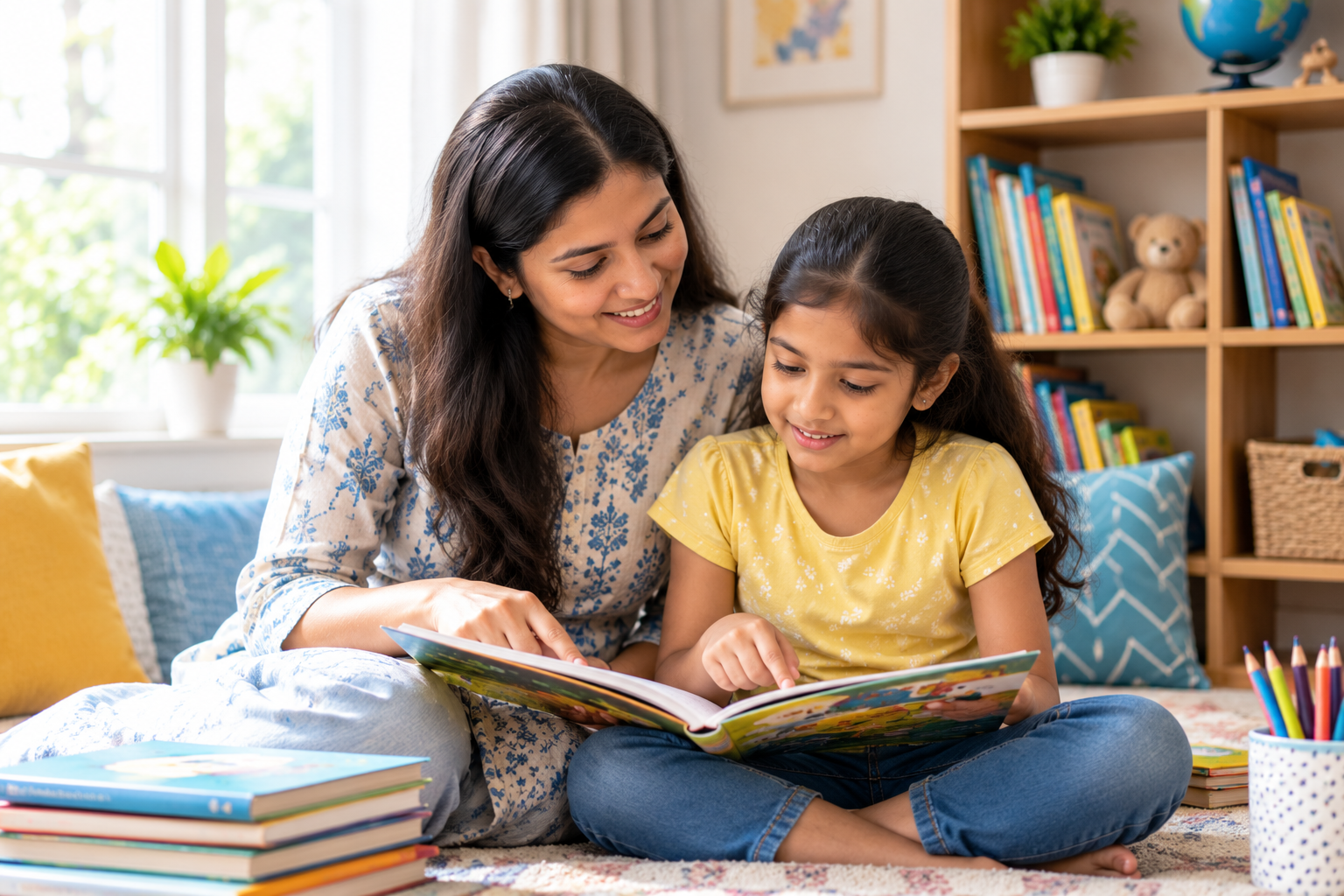
Children who can read independently can still enjoy being read to by an adult. Reading aloud models expression, pronunciation and how a reader makes sense of a story. It also lets children enjoy books that may be slightly above their independent reading level.
Make read-aloud time interactive rather than simply reading every word from beginning to end. Pause occasionally to look at the pictures, discuss an interesting event or wonder what might happen next.
Try questions such as:
- What do you think this character will do next?
- Which part of the story did you enjoy most?
- Why do you think the character felt upset?
- Does this remind you of anything that has happened to you?
- What would you have done in the same situation?
There is no need to ask every question in every session. Let the conversation develop naturally, and allow your child to ask questions too. For more ideas, explore these tips for reading with your child.
4. Make a comfortable reading corner
A reading corner does not need to be a separate room. A small space with good light, a comfortable seat and a few books can be enough. The important thing is that your child can access the books easily and sit comfortably without too many distractions.
Here are some simple ideas:
- Keep a small selection of books on a low shelf or in an accessible basket.
- Rotate the books occasionally so your child notices something new.
- Choose a quiet time when the television and other distractions are off.
- Keep pencils and paper nearby for drawing a favourite character or scene.
- Visit a library or exchange books with relatives when possible.
You do not have to buy new books every week. Borrowing, exchanging and re-reading books can keep reading affordable and varied. If your child prefers reading in a shared family space, there is no need to insist on a separate corner.
5. Let children read in their preferred language
In multilingual homes, children may hear and use more than one language every day. Books in a familiar language can be a welcoming starting point, particularly for children who find reading in another language difficult.
Offer age-appropriate stories in the language your child enjoys, whether that is Hindi, English or another language used at home. You can also explore bilingual books that present a story in two languages.
Talking about a story in the language your child is most comfortable with can help them share their ideas and understand what is happening. Over time, you can introduce books in another language according to their interests and reading development.
The goal is to nurture an interest in stories and meaning. Avoid making a child feel that one language is less valuable than another.
6. Turn reading into a family activity
Children notice how adults spend their time. When they see parents, grandparents or older siblings reading books, newspapers, recipes or instructions, reading becomes a normal part of daily life.
Try these simple family activities:
- Take turns reading: You read one page and your child reads the next, adapting the amount to the child's confidence.
- Tell family stories: Share a childhood memory and invite your child to tell a story of their own.
- Connect books to real life: After reading about plants, look at plants in your neighbourhood or garden.
- Visit a library: Let your child browse and choose suitable books.
- Share a favourite part: Each family member can talk about one thing they read or heard that day.
For more activity ideas, see the Government of India's Guidelines on Reading Campaign, which discusses access to interesting books, regular reading time, read-aloud activities, shared reading and book discussions.
7. Encourage reading without turning it into a test
It is natural for parents to want to know whether their child understands a story. However, if every reading session ends with a quiz, children may start to feel that they are being examined rather than enjoying a book.
Instead of asking a long list of comprehension questions, try a relaxed conversation. You might say, “That was an interesting ending. What did you think of it?” or “Which character would you like to meet?”
When your child struggles with a word, give them a moment to try. If they need help, say the word clearly and explain its meaning when useful. Praise their effort, curiosity and willingness to try again rather than focusing only on mistakes or reading speed.
Choose books that are comfortable enough for independent practice. If nearly every line is difficult, read that book together or select an easier one for independent reading. Children benefit from having both supported reading and opportunities to read material they can manage themselves.
8. Use screens thoughtfully
Printed books are not the only way to enjoy stories. Digital books and audiobooks can be useful options when they suit a child's needs and interests. An adult can listen with the child, discuss the story and help connect the words with the illustrations.
However, try to protect a regular period for focused reading without notifications or unrelated videos. If your child uses a digital book, choose the content intentionally and keep the experience centred on the story rather than switching between apps.
Balance is more helpful than treating every screen-based reading activity as bad. The important question is whether the activity helps your child engage with language, understand a story and enjoy reading.
9. What if your child does not enjoy reading?
Some children become interested in books quickly, while others need more time to find the right material. A lack of interest does not automatically mean a child is lazy or incapable of becoming a confident reader.
Try changing one thing at a time:
- Choose shorter material: Try a picture book, a comic or a short story instead of a long chapter book.
- Follow their interests: Offer books about animals, sport, space, art or another topic they already enjoy.
- Read together: Take turns or let your child listen while you read aloud.
- Reduce pressure: Stop before the activity becomes frustrating and try again later.
- Ask the teacher: Find out which reading skills your child is practising at school and how you can support them at home.
If your child consistently struggles to recognise words, read age-appropriate text, understand what they read or feels distressed during reading, speak with their teacher. Ask whether a reading assessment or additional support may be helpful. Persistent difficulty deserves patient attention, not blame or comparison with other children.
10. Work with your child's teacher
Parents and teachers can support reading more effectively when they share information. Ask the teacher about the books, sounds, vocabulary or reading strategies being taught in class. You can then practise similar skills at home without making the activity feel like extra schoolwork.
Useful questions to ask include:
- Is my child reading material suited to their current level?
- Which reading skills should we practise at home?
- Does my child need more support with word recognition, fluency or comprehension?
- Are there suitable books or reading activities you recommend?
Some children benefit from additional individual attention when they need help with reading foundations or confidence. If you are exploring extra learning support, you can find a home or online tutor and discuss your child's learning needs before deciding what support is appropriate.
A simple seven-day plan to get started
Use this flexible plan to introduce a reading routine without overwhelming your child. Repeat the activities your child enjoys and change the books or timing as needed.
Day | Activity |
|---|---|
Day 1 | Let your child choose a book and read together for a few minutes. |
Day 2 | Read a short story aloud and talk about one favourite part. |
Day 3 | Let your child read a few pages independently or take turns reading. |
Day 4 | Choose a comic, poem, animal book or another format your child enjoys. |
Day 5 | Connect a story to real life through a drawing, conversation or simple activity. |
Day 6 | Visit a library, browse your home collection or exchange books with someone. |
Day 7 | Ask which book or activity your child liked most and choose what to read next. |
At the end of the week, focus on what made your child curious or happy. You do not need to measure success by the number of pages completed. A child who looks forward to the next story is making a useful start.
Frequently asked questions
How can I develop a reading habit in my primary school child?
Start with a short daily reading session, offer books based on your child's interests and make time to read together. Let your child choose suitable books and keep the experience relaxed. A consistent routine is usually more practical than expecting long reading sessions immediately.
How many minutes should a child read every day?
There is no single duration that suits every child. Around 10 minutes can be a manageable starting point for a busy family, and the time can gradually increase as the child becomes interested. Follow your child's age, reading level, attention and school guidance rather than treating a particular number of minutes as a strict requirement.
Should parents read aloud to children who already know how to read?
Yes. Reading aloud can help children enjoy more complex stories, hear fluent reading and discuss new words and ideas. Parents can also take turns reading with the child so that independent practice remains part of the routine.
What types of books are best for primary school children?
Choose books that match the child's reading ability and interests. Picture books, comics, short stories, poems, folk tales and simple non-fiction can all be useful. Offer variety and let the child help choose rather than insisting that every book must be educational or related to schoolwork.
What should I do if my child avoids reading?
Try shorter books, read aloud together, explore different subjects and reduce pressure. Speak with the child's teacher if difficulties persist or reading causes ongoing frustration. The teacher can help identify the skills that need support and suggest suitable next steps.
Can reading in Hindi or another home language help my child?
Yes. Reading stories in a familiar language can help children participate in conversations and enjoy books. Families can offer books in Hindi, English and other languages used at home, choosing materials that are suitable for the child's interests and reading development.
Final thoughts
Building a reading habit in primary school children does not require strict rules or an expensive collection of books. Start small, keep books within reach, read together and allow children to explore the stories and subjects that interest them.
Make reading a positive part of family life, and stay in touch with your child's teacher if extra support is needed. With patience, suitable material and regular opportunities to read, you can help your child develop a more comfortable and enjoyable relationship with books.
For more practical learning tips for families, explore the Tuitions Teacher blog.