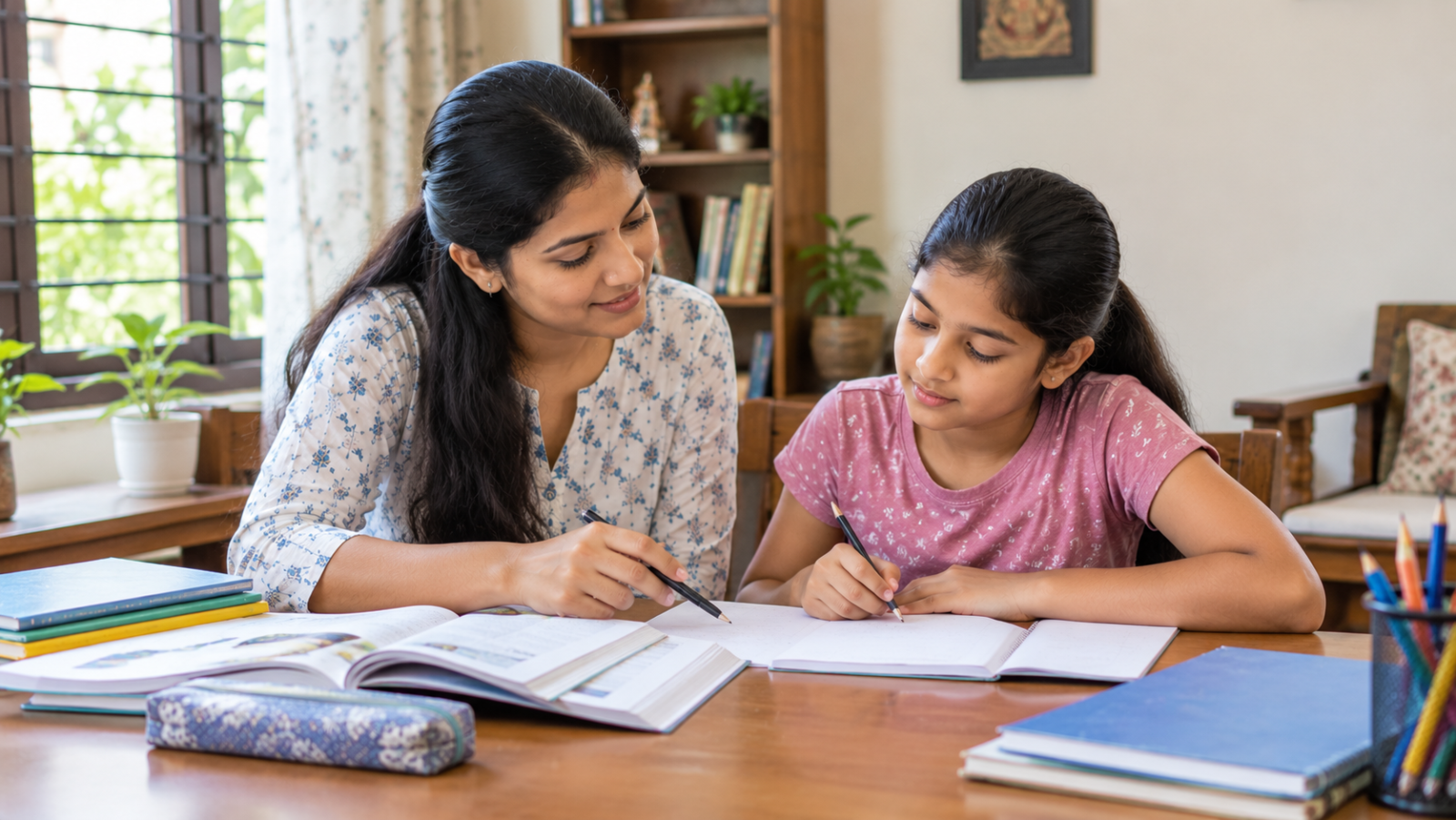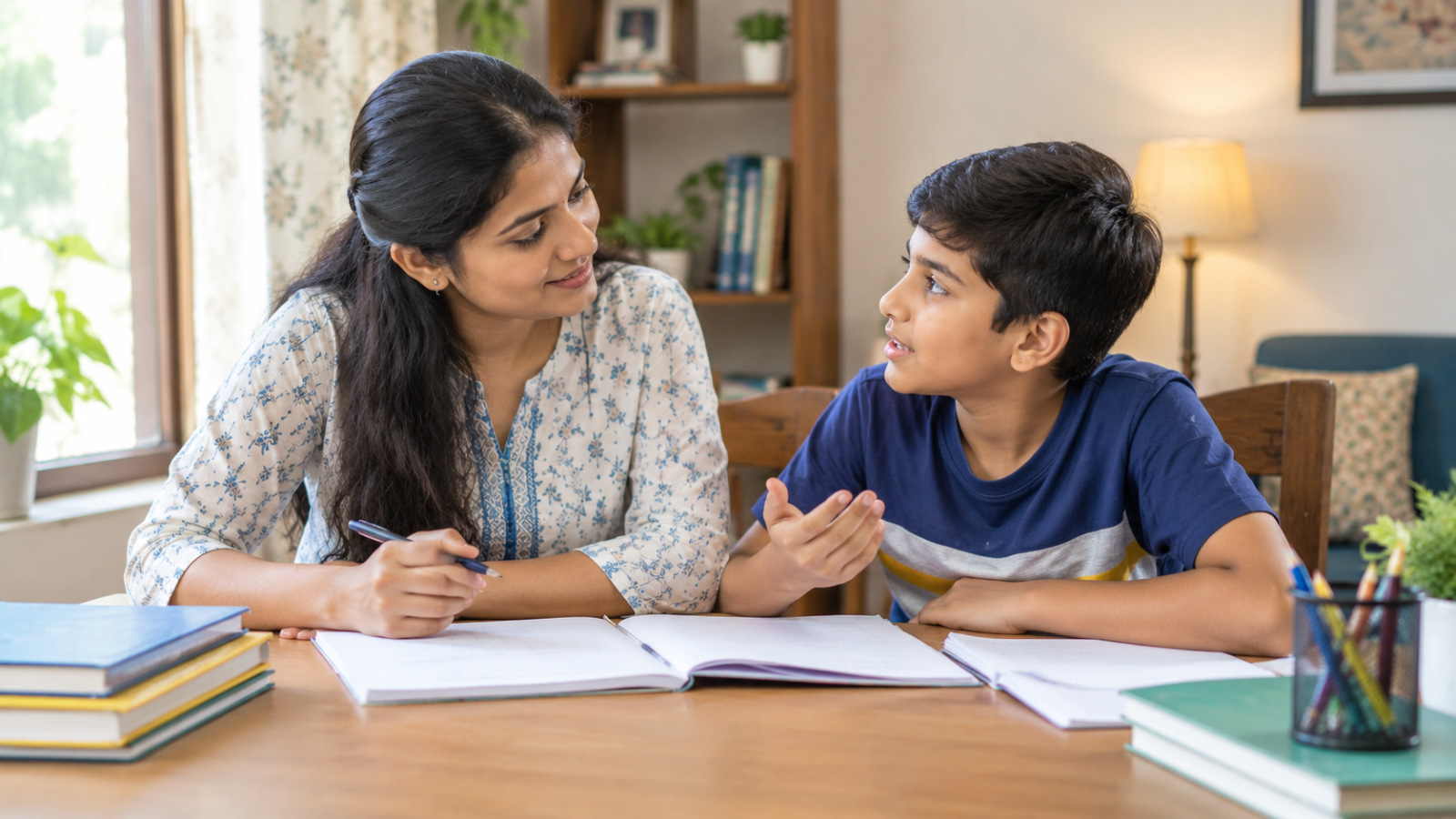

Quick answer: Parents can encourage better classroom participation by helping children feel confident, listening to their ideas, practising conversations at home and working positively with teachers. The goal is not to make every child the loudest speaker in class, but to help them ask questions, share ideas and take part in learning at a comfortable pace.
Does your child understand a lesson but hesitate to answer questions in class? Do they know the answer at home but become quiet when the teacher asks them to speak? These situations can worry parents, especially when they want their children to make the most of school.
Classroom participation involves much more than raising a hand. It can include asking for clarification, discussing an idea with classmates, contributing to group activities, sharing written answers and explaining how a problem was solved. Parents can support these skills through everyday conversations and small, consistent steps.
Why Classroom Participation Matters
Classroom participation gives children opportunities to express their understanding, ask questions and learn from other viewpoints. When children explain an idea aloud, they may also recognise gaps in their own understanding and learn to organise their thoughts more clearly.
Participation can also help teachers understand what students have learned and where they need additional support. However, a quiet child is not necessarily struggling. Some children prefer listening and thinking before speaking, while others may need more time to feel comfortable in a group.
As a parent, focus on whether your child is learning, understanding lessons and gradually developing confidence. Avoid comparing their speaking style with that of more outgoing classmates.
How Parents Can Encourage Better Classroom Participation
1. Build confidence through everyday conversations
Children often practise communication skills first at home. Give your child regular opportunities to explain their thoughts, describe an experience or talk about something they found interesting at school.
For example, ask, “What was the most interesting thing you learned today?” or “If you could ask your teacher one question about today's lesson, what would it be?” These open-ended questions encourage children to think and respond in their own words.
Listen without interrupting or correcting every sentence. When children feel that their opinions are respected, they may become more willing to share them in other settings too.
2. Encourage questions instead of expecting perfect answers
Some children avoid speaking because they are afraid of giving a wrong answer or being laughed at. Help them understand that questions and mistakes are normal parts of learning.
When your child asks a question at home, respond positively even if it seems simple. You could say, “That is a useful question. Let's work out the answer together.” This teaches children that curiosity matters more than always being correct.
Practise useful classroom phrases such as “Could you explain that again?”, “I have a different idea” and “Can I ask a question?” Familiar language can make it easier for children to speak when they need help.
3. Practise explaining lessons at home
Invite your child to explain a topic they recently studied. They might describe a science concept, summarise a story, solve a Maths problem or teach you a new word.
Keep the activity relaxed and short. You do not need to turn every evening into another school lesson. Ask a follow-up question, appreciate their effort and help them organise their explanation if needed.
For younger children, storytelling, picture descriptions and simple show-and-tell activities can be useful. Older students may benefit from summarising a chapter, explaining how they reached an answer or discussing two sides of an issue.
4. Avoid putting pressure on shy children
Repeatedly saying “Why don't you speak in class?” or comparing your child with a more talkative friend can make participation feel like a test. Children may become more self-conscious when they believe that every conversation is being judged.
Instead, recognise small steps. If your child asked a question, contributed to a group discussion or spoke to the teacher about a doubt, acknowledge the effort without making it a major performance.
You can say, “I am glad you shared your idea today. How did you feel about it?” This allows your child to reflect on the experience without feeling pressured to do more immediately.
Simple Activities to Practise Classroom Participation at Home
You do not need expensive materials or formal communication classes to help your child practise. Everyday activities can create comfortable opportunities to speak, listen and explain ideas.
- Family discussion: Choose a simple topic, such as a favourite book or an environmental habit, and let everyone share an opinion.
- Teach-back activity: Ask your child to explain one thing they learned that day in their own words.
- Question of the day: Invite your child to prepare one question about a subject they are studying.
- Storytelling: Encourage your child to describe what happened first, next and last in a story or real-life event.
- Role-play: Take turns acting as a student and teacher to practise asking for help or answering a question.
- Group problem-solving: Work together on a puzzle, recipe or simple project and ask each family member to explain their approach.
These activities should feel like conversations, not examinations. Let your child choose topics that interest them and allow time to think before answering.
Work With Teachers to Understand Your Child's Needs
If your child consistently avoids classroom participation, speak with their teacher to understand what happens during lessons. Ask whether the child participates in small groups, completes written tasks, asks questions privately or appears hesitant only when speaking in front of the whole class.
Share what you notice at home as well. Your child may explain ideas comfortably to family members but find larger groups difficult. Understanding both perspectives can help you and the teacher identify appropriate next steps.
The Education Endowment Foundation's guidance on working with parents to support children's learning emphasises constructive partnerships between families and schools. Positive, two-way communication can help adults share useful information and plan support around a child's learning needs.
Depending on the situation, a teacher might offer advance notice of a question, begin with pair discussions, give the child a defined role in group work or provide another suitable way to contribute. Ask what is practical in your child's classroom rather than assuming that one approach will work for everyone.
Help Children Participate in Group Activities
Whole-class speaking can feel intimidating, particularly for children who need time to prepare their thoughts. Small-group activities can provide a more manageable starting point.
At home, practise working together on a small task. Ask your child to suggest an idea, explain a choice or take responsibility for one part of the activity. You can also discuss polite ways to agree, disagree and invite another person to share their opinion.
For example, useful phrases include “I agree because…”, “I see it differently because…” and “What do you think?” These expressions help children take part in discussions while respecting other people.
Research-informed teaching guidance from Carnegie Mellon University's Eberly Center describes approaches such as written responses, advance preparation and small-group discussion to provide different routes into classroom conversations. Parents can reinforce similar habits at home without forcing children to speak before they feel ready.
Recognise Different Ways of Participating
Not all children show engagement in the same way. One child may regularly answer questions aloud, while another carefully completes written work, listens closely or contributes thoughtful ideas during pair activities.
Encourage your child to develop speaking skills, but do not treat extroversion as the only sign of confidence or learning. The aim is to help them participate meaningfully and communicate when they need to.
Ask your child which classroom activities feel comfortable and which feel difficult. Their answers may reveal that speaking to a partner is manageable, while giving a presentation to the whole class requires more preparation.
Celebrate progress relative to your child's own starting point. A small contribution made willingly can be more meaningful than a longer answer delivered under pressure.
What If Your Child Still Avoids Speaking in Class?
If your child remains reluctant to participate despite encouragement, try to understand the reason before introducing more practice. They may be worried about making mistakes, struggling to follow the lesson, finding the classroom environment uncomfortable or experiencing difficulties with classmates.
Ask gentle, specific questions such as “Is it easier to answer in a small group?” or “What happens when you want to ask the teacher something?” Listen carefully and avoid assuming that the problem is simply a lack of confidence.
If the difficulty persists or affects your child's learning and wellbeing, discuss it with the teacher and consider seeking appropriate support through the school. If your child describes bullying, humiliation or feeling unsafe, take the concern seriously and work with the school to address it.
Additional academic support may help when a child avoids speaking because they are unsure of the lesson content. Parents who are considering extra guidance can find a verified home tutor or browse tutor profiles by subject and class. A suitable tutor can provide opportunities to ask questions and practise explaining ideas in a more individual learning setting, though classroom participation may still need support from the school.
Create a Supportive Routine Without Adding Pressure
Confidence develops through repeated experiences, encouragement and opportunities to practise. A simple routine is often more helpful than long conversations about why a child should speak more in class.
- Spend a few minutes discussing the school day.
- Invite your child to explain one idea or ask one question about a lesson.
- Listen carefully and praise effort, curiosity and persistence.
- Check in with the teacher when you need a clearer picture of classroom participation.
- Review progress occasionally without comparing your child with classmates.
Keep expectations realistic and adapt the routine to your child's age, interests and energy levels. The purpose is to make communication feel useful and safe, not to add another source of school-related stress.
Frequently asked questions
How can I help my child speak more confidently in class?
Encourage relaxed conversations at home, practise explaining familiar topics and help your child prepare simple questions for the teacher. Appreciate small efforts and avoid comparing your child with classmates. Confidence often grows gradually with supportive practice.
Why does my child know the answer but not raise their hand?
Your child may be worried about making a mistake, speaking in front of classmates or being judged. They may also prefer time to organise their thoughts. Speak with your child and teacher to understand the situation before deciding what support would help.
Should I force my shy child to participate in classroom discussions?
Forcing a child to speak can increase pressure and make participation more uncomfortable. Instead, build confidence through small steps, such as practising at home, sharing ideas with a partner and preparing an answer in advance. Work with the teacher to find suitable opportunities.
What activities improve classroom participation?
Storytelling, family discussions, teach-back activities, role-play and group problem-solving can help children practise expressing ideas. Keep these activities enjoyable and appropriate for your child's age. Encourage both speaking and listening.
How can parents work with teachers to improve participation?
Ask the teacher how your child contributes during different activities and share what you observe at home. Together, you can identify barriers and agree on practical strategies, such as small-group discussions or advance preparation. Follow up periodically to see whether the approach is helping.
When should I seek extra help for my child?
Consider additional support if your child repeatedly struggles to understand lessons, avoids asking for help or experiences ongoing distress that affects learning. Begin by speaking with the teacher and explore suitable school or professional support where needed. Avoid assuming that quiet behaviour alone means a child has a learning problem.